

AI is being applied to almost everything.
Dashboards.
Workflows.
Decision systems.
Often without a clear reason. At the same time, many organisations still rely on:
- manual processes
- fragmented workflows
- inconsistent operational logic
This creates a paradox. Teams invest in AI while the underlying systems remain structurally weak. The result is not intelligence. It is increased complexity. The real question is not:
“Where can we use AI?”
But:
“What actually requires intelligence—and what simply requires structure?”
Automation and AI solve different problems
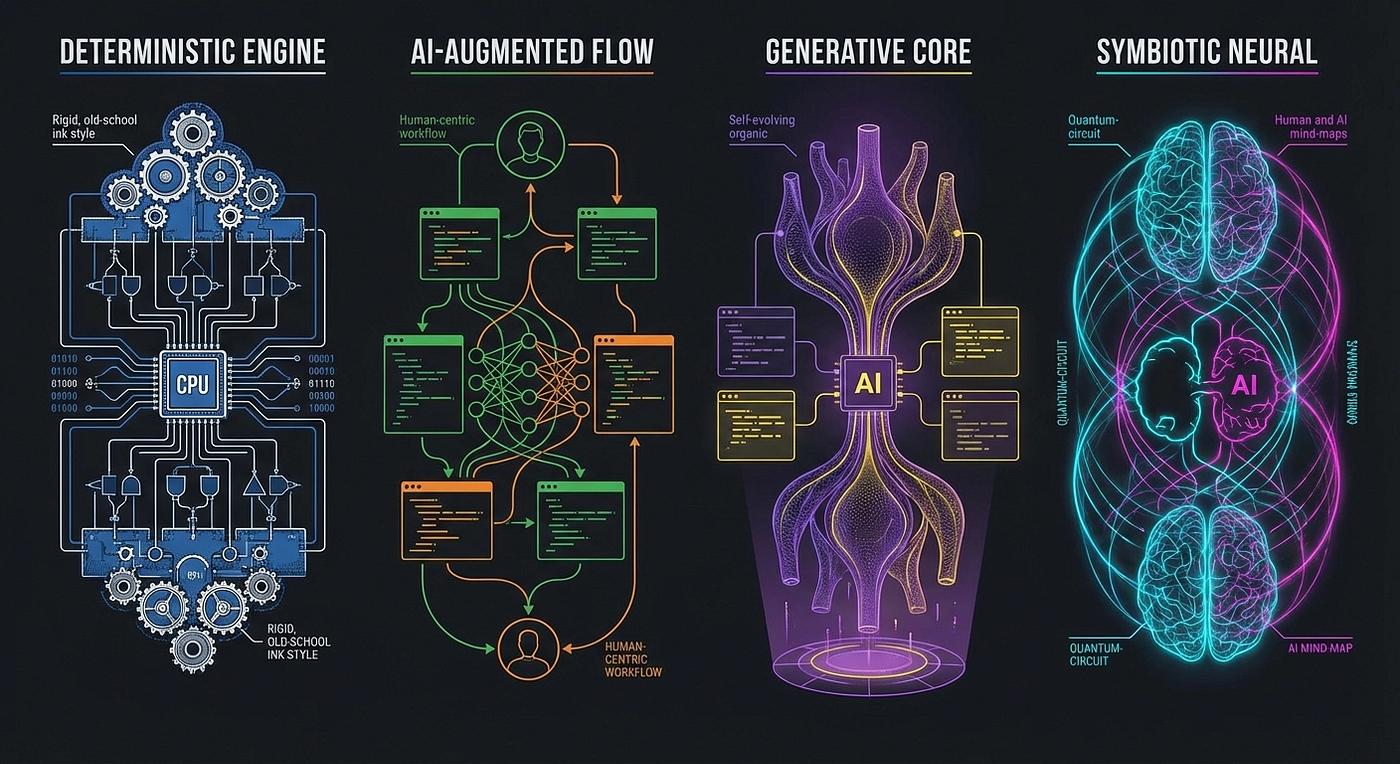
Automation and AI are fundamentally different system behaviours. Automation is deterministic. AI is probabilistic. That distinction matters.
Automation
Automation operates through:
- rules
- predictable workflows
- repeatable execution
It is used for:
- workflow orchestration
- data processing
- infrastructure operations
- operational execution
Automation creates consistency. When systems know what to do, automation is usually the correct solution.
AI
AI operates differently. It is designed for:
- pattern recognition
- probabilistic reasoning
- adaptive behaviour
- uncertainty
It is valuable when systems cannot rely on explicit rules alone. Examples include:
- anomaly detection
- fraud detection
- predictive analysis
- decision support systems
AI increases system capability. But it also increases uncertainty.
Most systems do not need more intelligence
Many operational problems are not intelligence problems. They are structure problems.
Processes are disconnected.
Data is fragmented.
Workflows depend on coordination.
Adding AI on top of weak systems rarely improves them. It often amplifies the underlying complexity.
Automation reduces complexity
Well-designed automation:
- improves predictability
- reduces operational overhead
- removes manual coordination
- increases reliability
Automation works because behaviour is defined. The system knows:
- what should happen
- when it should happen
- how execution should occur
This creates operational stability.
AI creates value at the decision layer
AI becomes valuable where systems operate under uncertainty. Not where rules already exist. AI performs best when systems need to:
- identify patterns across large datasets
- detect anomalies in real time
- predict behaviour before events occur
- support complex decision-making
This is where intelligence creates leverage. Not by replacing systems. But by augmenting decision-making.
Intelligence depends on system quality
AI is only as reliable as the systems around it. Without:
- structured data
- connected systems
- observable workflows
- operational consistency
AI becomes unreliable. Weak systems produce weak intelligence. Strong systems allow intelligence to become operational.
The highest-value systems combine both
The most effective systems use automation and AI differently. AI handles uncertainty. Automation handles execution.
For example:
- AI identifies anomalies
- automation triggers operational workflows
Or:
- AI determines the next action
- automation executes it consistently
This balance matters. AI decides. Automation delivers.
The real risk is misapplication
The biggest mistake is applying AI where deterministic systems are sufficient. This introduces:
- unnecessary complexity
- unpredictable behaviour
- operational fragility
- increased maintenance overhead
Not every workflow requires intelligence. Many systems simply require better structure.
What good systems look like
Well-designed systems:
- automate repeatable processes
- apply AI only where uncertainty exists
- remain observable and predictable
- scale without increasing fragility
They are not AI-first. They are structure-first.
Final perspective
AI is powerful. But it is not a shortcut. It is a multiplier. If systems are fragmented, AI amplifies the fragmentation. If systems are structured, AI amplifies operational value. The objective is not to maximise intelligence. It is to design systems that behave predictably while making better decisions under complexity.
Systems do not improve because they become more intelligent.
They improve because intelligence is applied where it actually matters.
If your systems are becoming more complex without becoming more effective, the architecture behind them may need to change.
→ Plan a meeting