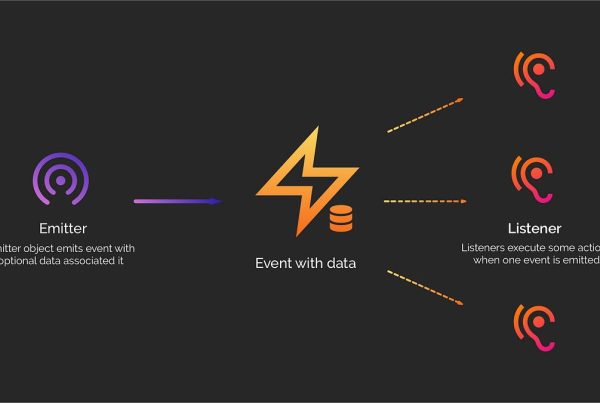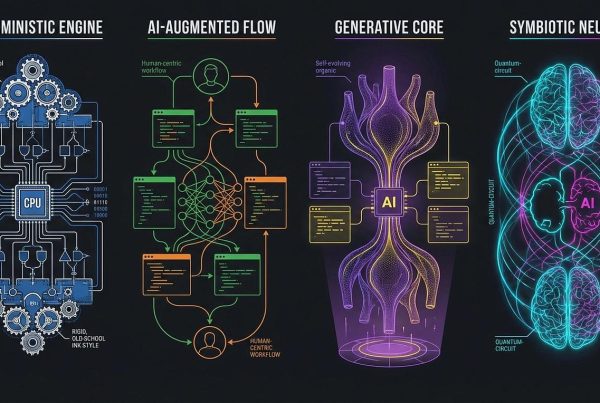



Most systems do not fail because of functionality. They fail because systems do not operate together.
Applications are implemented independently.
Data exists across disconnected platforms.
Processes rely on coordination between tools and people.
At small scale, this creates friction. At system scale, it creates operational limitations. Integration architecture exists to solve this structurally.
Disconnected systems create operational complexity
Most organisations evolve through layers of software.
Operational platforms.
Financial systems.
Internal tooling.
External services.
Each solves a specific requirement. But without structure, systems become fragmented. This creates:
- duplicated data
- inconsistent workflows
- delayed decision-making
- operational dependency between systems
The issue is rarely the systems themselves. It is how they interact.
APIs are infrastructure, not features
APIs form the foundation of modern systems. They allow systems to:
- exchange data
- trigger workflows
- synchronise operational state
But APIs alone do not create scalable systems. Without architecture, integrations become:
- tightly coupled
- difficult to maintain
- operationally fragile
Integration architecture determines how systems behave together over time.
Integration must be designed at system level
Effective integration is not about connecting endpoints. It is about designing how systems operate as one environment. This requires:
- structured data flow
- controlled dependencies
- predictable communication between systems
- consistency across workflows
When integrations are improvised, complexity increases with every new connection. When integrations are designed structurally, systems remain maintainable as they evolve.
Automation depends on integration
Automation only works when systems are connected correctly. Without integration:
Processes depend on manual coordination.
Data must be transferred between systems.
Workflows cannot execute end-to-end.
With structured integrations:
- systems trigger actions automatically
- workflows operate across environments
- operational state remains synchronised
Automation becomes part of system behaviour instead of an additional layer.
Intelligence depends on integration
AI systems depend on operational context. Without connected systems:
- data remains fragmented
- workflows remain disconnected
- insights cannot influence operations
Integration architecture is what allows intelligence to become operational. It enables systems to:
- operate on real-time data
- trigger decisions automatically
- adapt workflows dynamically
Without integration, intelligence remains isolated.
Scalable systems require integration discipline
As systems grow, integrations multiply.
New platforms.
New workflows.
New dependencies.
Without structure, integrations become the bottleneck. Scalable integration architecture requires:
- maintainable interfaces
- controlled system boundaries
- versioning and compatibility
- predictable operational behaviour
This allows systems to evolve without introducing fragility.
Final perspective
System integration is not about connecting software. It is about designing how systems operate together. Scalable systems depend on:
- structured integrations
- controlled data flow
- predictable workflows
- maintainable architecture
Because software alone does not create operational scale. Connected systems do.
Systems do not become scalable because they are connected.
They become scalable because those connections are designed correctly.
If your systems are becoming harder to coordinate as complexity grows, the integration architecture behind them may need to change.