


Most companies don’t realise they have an integration problem. At first, everything seems to work. Orders come in. Reports get generated. Customers get served. Then the business grows. A new platform gets added. Another marketplace gets connected. Finance needs different reporting. Operations introduces new workflows. Nothing breaks immediately. But things start becoming harder to manage. Different systems show different numbers. Teams spend more time checking data than using it. Simple operational changes suddenly require coordination across multiple platforms. What looks like a software problem is often an integration problem.
Software is easy. Getting software to work together is hard.
Most organisations don’t operate on a single platform. They rely on:
- operational systems
- financial systems
- ecommerce platforms
- marketplace integrations
- reporting tools
- internal workflows
Every system solves a specific problem. The challenge starts when those systems need to operate as one environment. That is where complexity begins to appear. Not because the systems are bad. But because nobody designed how they should work together.
Most integrations are built for today
A common pattern appears in growing organisations. A new requirement emerges. Someone builds an integration. The problem disappears. A few months later another integration gets added. Then another. Then another. Eventually the business depends on dozens of connections between systems. The problem is that most integrations are designed to solve an immediate need. Very few are designed to support long-term operations. That distinction matters. Because every integration becomes part of the operational infrastructure.
The hidden cost of disconnected systems
Poor integrations rarely fail dramatically. They fail quietly. Data arrives late. Inventory becomes inaccurate. Reports don’t match. Teams start creating manual checks. Workarounds become normal. Eventually people stop trusting the system. And once trust disappears, operational complexity grows quickly. The organisation becomes dependent on coordination instead of automation. That is usually the point where scaling becomes difficult.
APIs are infrastructure
Many people think APIs are technical tools. In reality, APIs are operational infrastructure. They determine how information moves through a business. They determine:
- how quickly systems respond
- how reliable workflows become
- how data remains consistent
- how easily operations can evolve
A poorly designed API architecture creates friction. A well-designed API architecture creates control. The difference becomes increasingly visible as the organisation grows.
Automation depends on integration
Automation only works when systems can reliably communicate. Without proper integrations:
- people move information manually
- workflows stop at system boundaries
- operational visibility decreases
With proper integrations:
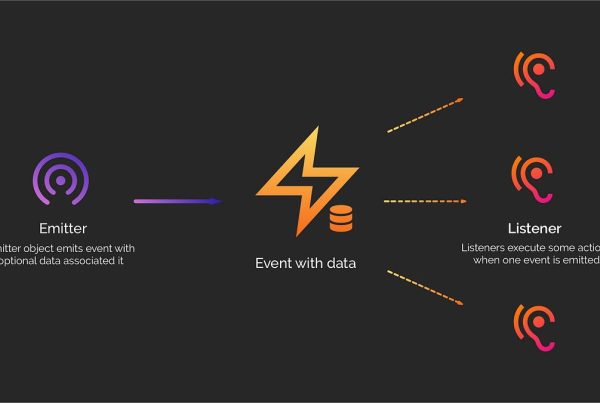
- systems trigger actions automatically
- information remains synchronised
- workflows continue without intervention
At that point automation becomes part of the operation itself. Not an additional layer on top of it.
AI depends on integration even more
This is becoming increasingly important. Many companies are investing in AI. But AI depends on operational context. If data is fragmented across disconnected systems, intelligence remains fragmented as well. AI cannot make good decisions when every platform tells a different story. Before businesses can benefit from intelligent systems, they usually need better connected systems. Integration architecture often becomes the foundation for everything that comes later. Including automation. Including AI. Including operational decision-making.
Scalability is an integration challenge
As organisations grow, integrations multiply. More systems. More workflows. More dependencies. More operational complexity. The companies that scale effectively are not necessarily the ones with the best software. They are often the ones with the best integration architecture. Because scalability is not about adding more systems. It is about making systems operate together without creating chaos.
Final Perspective
Most software projects focus on functionality. But functionality is rarely what breaks first. What breaks first is coordination. Systems stop agreeing with each other. Workflows become fragmented. Operations become difficult to manage. That is why integration architecture matters. Not because systems need to be connected. But because businesses need systems that can operate together reliably as complexity increases. Software creates capability. Integration creates scale.