


Most e-commerce systems don’t fail because of demand. They fail because they were never designed as a system.
A webshop is added.
A marketplace follows.
Inventory, pricing, logistics—each handled by a separate tool.
At small scale, this works. At scale, it breaks. Not because of growth. Because of structure.
🟧 The limitation of tool-based systems
Tools solve isolated problems. E-commerce operations are not isolated. As systems grow:
Data spreads across tools
Workflows depend on coordination
Logic becomes fragmented
Errors become harder to trace
Each tool works individually. Together, they do not form a system.
🟧 A scalable platform is a system
A scalable e-commerce SaaS platform is not a collection of tools. It is an operational layer. A system where:
Data flows across systems
Workflows execute end-to-end
Operations are centralised
Complexity is contained
Tools don’t disappear. They are orchestrated.
🟧 What actually defines a scalable platform
A real platform is defined by structure, not features.
Integration as infrastructure
A platform integrates systems like:
Shopify
WooCommerce
Amazon
Bol.com
But integration is not the goal. Structure is. Data flows through one system—not between isolated tools.
Unified data layer
Orders, inventory, and pricing are not duplicated across systems. They are owned and controlled in one place. This creates:
Consistency
Reliability
Real-time visibility
Automation as default
Manual workflows do not scale. Processes are executed automatically:
Orders
Inventory
Pricing
Communication
Automation is not an optimisation. It is the baseline.
Operational control
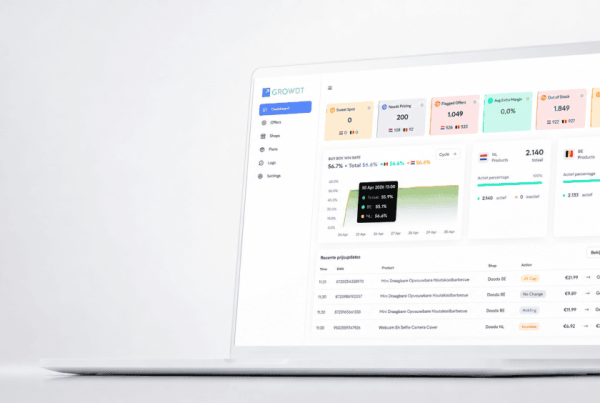
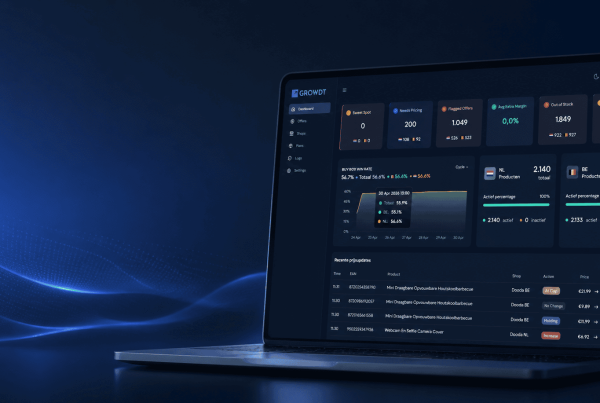
A platform provides a single interface for operations. Not as a dashboard. But as the control layer of the system.
Architecture that scales
A real SaaS platform is:
Multi-tenant
API-driven
Designed for increasing volume
It evolves without requiring structural changes.
🟧 What changes in practice
Without a system:
Manual handling increases
Data becomes inconsistent
Operations become fragile
Growth creates complexity
With a system:
Processes execute automatically
Data remains consistent
Operations are controlled
Growth becomes predictable
🟧 Why this matters
Scaling e-commerce is not about adding tools. It is about structuring the system.
Reducing operational friction.
Automating execution.
Maintaining control under growth.
That is what allows systems to scale.
🟧 Final perspective
Every e-commerce business reaches the same point. Tools stop working. Structure becomes the constraint. At that point, the decision is not technical. It is architectural.
A scalable platform is not built by adding tools.
It is designed as a system.
If this resonates, let’s have a conversation.